Sciatica Treatment | Expert Physiotherapy for Sciatica Pain | Motive To Move Physiotherapy and Rehab Centre
Suffering from sciatica? Learn about its causes, symptoms, and the most effective physiotherapy treatments. Get expert care at Motive To Move Physiotherapy and Rehab Centre to relieve pain and restore movement.
What Is Sciatica?
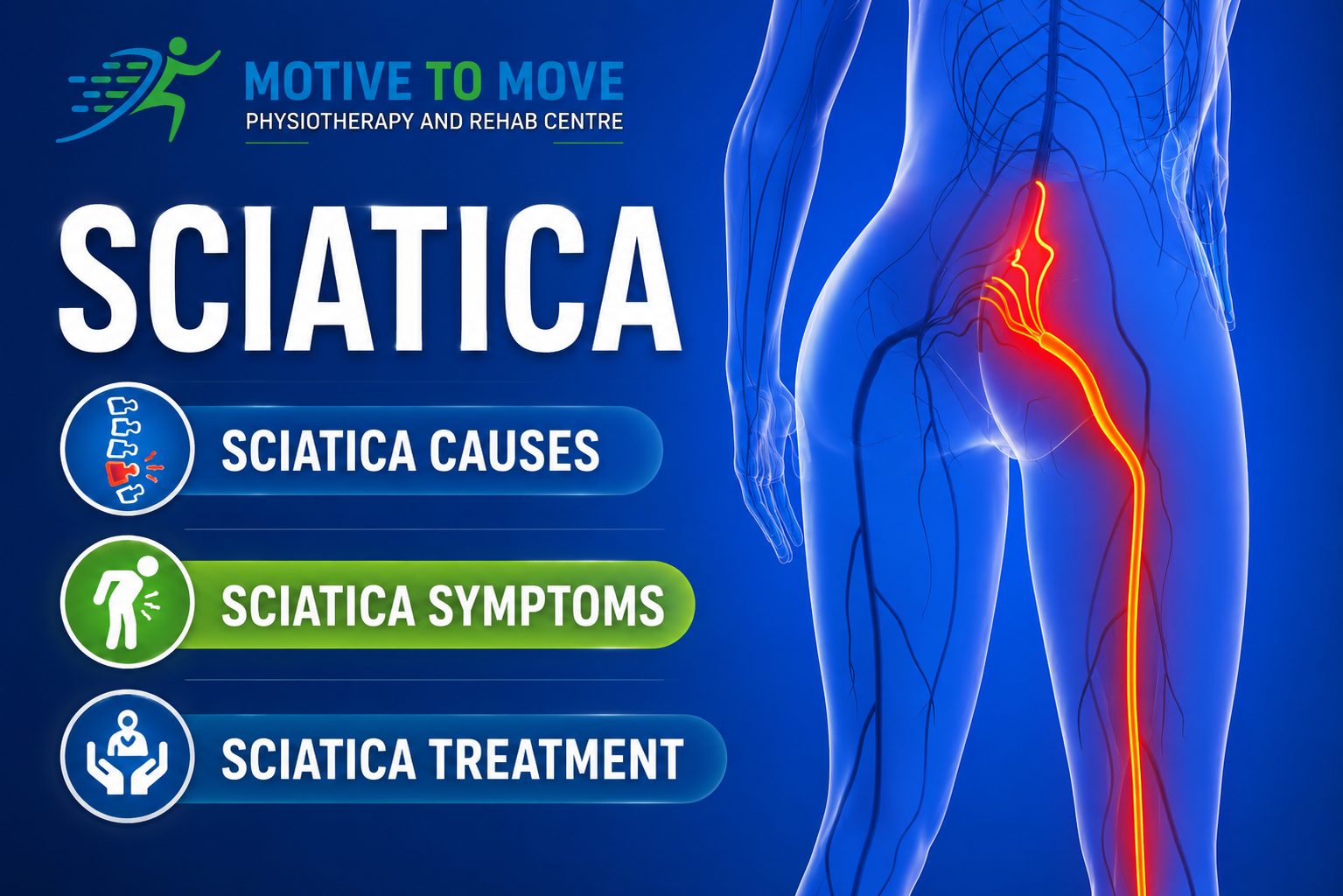
Sciatica is a condition caused by irritation, inflammation, or compression of the sciatic nerve, the longest and largest nerve in the human body. The sciatic nerve begins in the lower spine, passes through the buttocks, and extends down each leg.
When this nerve becomes compressed, pain can radiate from the lower back into the buttock, thigh, calf, and sometimes even the foot.
Common Causes of Sciatica
Several conditions can compress or irritate the sciatic nerve, including:
- Herniated (slipped) lumbar disc
- Degenerative disc disease
- Lumbar spinal stenosis
- Piriformis syndrome
- Spondylolisthesis
- Muscle tightness and inflammation
- Poor posture and prolonged sitting
- Sports injuries or lifting heavy objects incorrectly
Understanding the exact cause is essential because successful treatment depends on an accurate diagnosis.
Symptoms of Sciatica
Sciatica symptoms usually affect one side of the body and may include:
- Sharp or burning pain from the lower back into the leg
- Pain that worsens while sitting
- Tingling or “pins and needles”
- Numbness in the leg or foot
- Muscle weakness
- Difficulty walking comfortably
- Pain while coughing, sneezing, or bending forward
The severity varies from mild discomfort to debilitating pain that affects work and daily life.
Who Is Most at Risk?
You may be more likely to develop sciatica if you:
- Sit for long hours
- Have poor posture
- Perform repetitive lifting
- Are overweight
- Have weak core muscles
- Have diabetes
- Participate in physically demanding jobs or sports
Maintaining spinal health and staying active can significantly reduce your risk.
How Physiotherapy Helps Sciatica
Physiotherapy is one of the safest and most effective treatments for sciatica. At Motive To Move Physiotherapy and Rehab Centre, every treatment plan is tailored to your condition, symptoms, and lifestyle.
Your rehabilitation program may include:
Comprehensive Assessment
We begin by identifying the source of your pain through detailed physical examination and movement analysis.
Pain Management
Treatment may include manual therapy, soft tissue release, joint mobilization, and evidence-based pain-relieving techniques to reduce nerve irritation.
Depending on your condition and assessment findings, Motive To Move Physiotherapy and Rehab Centre may include advanced pain management techniques along with manual therapy and exercise-based rehabilitation.
Electrotherapy
Electrotherapy uses controlled electrical stimulation to help reduce pain, relax muscles, improve circulation, and support recovery. Depending on your symptoms, treatment may include:
- TENS: Helps reduce pain signals and nerve-related discomfort.
- IFT: Helps manage deeper pain and muscle spasm.
- Ultrasound Therapy: Supports soft tissue healing and reduces stiffness.
- EMS: Helps activate weak muscles and improve muscle function.
Cupping Therapy
Cupping therapy uses controlled suction to improve local blood flow and reduce muscle tightness. It may help with muscle stiffness, trigger points, and discomfort associated with back pain.
Heat & Cold Therapy
- Heat therapy: Helps relax tight muscles, improve flexibility, and prepare tissues for movement.
- Cold therapy: Helps reduce pain and inflammation during acute flare-ups.
Dry Needling
Dry needling is an advanced physiotherapy technique used to target muscle trigger points. It may help reduce muscle tension, improve mobility, and relieve pain associated with muscular dysfunction.
At Motive To Move Physiotherapy and Rehab Centre, these techniques are combined with manual therapy and customized exercises to restore movement, improve function, and support long-term recovery.
Manual Therapy
Manual therapy is a specialized hands-on treatment that helps restore normal movement and reduce pain. Depending on your condition, your physiotherapist may use:
- Joint mobilization to improve spinal and pelvic mobility
- Soft tissue release to reduce muscle tightness and spasms
- Muscle Energy Techniques (MET) to restore joint alignment and mobility
- Gentle spinal mobilization where clinically appropriate
These techniques help decrease pressure on the sciatic nerve, improve movement, and prepare the body for rehabilitation exercises.
Advanced Physiotherapy Techniques
Our clinic combines traditional physiotherapy with advanced, evidence-based rehabilitation methods to achieve faster and longer-lasting results. Treatment may include:
- Neural mobilization (nerve gliding/flossing) to improve sciatic nerve mobility
- McKenzie Method exercises for disc-related back pain
- Mulligan Concept mobilization techniques, when appropriate
- Core strengthening and motor control training
- Balance and proprioception exercises
- Gait and walking pattern correction
- Ergonomic assessment and posture correction
These techniques are selected based on your diagnosis, symptoms, and functional needs.
Therapeutic Exercise Program
Exercise is one of the most effective long-term treatments for sciatica. Your personalized program may include:
- Gentle stretching exercises
- Core strengthening
- Hip and glute strengthening
- Lumbar stabilization exercises
- Home exercise program to maintain recovery
By combining education with active rehabilitation, we help patients achieve lasting results rather than temporary relief.
Should You Stay in Bed?
No.
While severe pain may require temporary rest, prolonged bed rest often delays recovery. Gentle walking, guided exercises, and remaining as active as possible are generally recommended for most people with sciatica.
When Should You See a Physiotherapist?
Seek professional assessment if:
- Pain lasts longer than one week
- Symptoms keep returning
- You experience numbness or weakness
- Walking becomes difficult
- Pain interferes with sleep or work
- Home exercises are not helping
Early treatment often leads to faster recovery and reduces the risk of chronic pain.
Can Sciatica Be Prevented?
Although not every case can be prevented, you can greatly reduce your risk by:
- Exercising regularly
- Strengthening your core muscles
- Maintaining good posture
- Avoiding prolonged sitting
- Using proper lifting techniques
- Maintaining a healthy weight
- Taking movement breaks during work
Small daily habits make a significant difference in long-term spinal health.
Frequently Asked Questions
How long does sciatica last?
Many patients recover within 4–8 weeks with appropriate treatment, although recovery depends on the underlying cause and severity.
Is walking good for sciatica?
Yes. Gentle walking is often beneficial because it promotes circulation, reduces stiffness, and encourages healing.
Can physiotherapy cure sciatica?
Physiotherapy successfully treats many cases of sciatica by addressing the underlying cause, improving movement, strengthening supporting muscles, and preventing recurrence.
Is surgery necessary?
Most people recover without surgery. Surgery is generally considered only when severe nerve compression causes significant weakness, loss of function, or when conservative treatment has not provided relief.
Why Choose Motive To Move Physiotherapy and Rehab Centre?
At Motive To Move Physiotherapy and Rehab Centre, we focus on helping people move better, recover faster, and live pain-free.
Our approach includes:
- Individualized treatment plans
- Evidence-based physiotherapy
- Hands-on manual therapy
- Exercise-based rehabilitation
- Posture and ergonomic correction
- Patient education for long-term recovery
We don’t just treat pain—we help restore movement, improve function, and reduce the chances of future injuries.
Book Your Consultation Today
If you’re experiencing pain that travels from your lower back into your leg, don’t ignore it. Early assessment and the right physiotherapy treatment can prevent long-term problems and help you recover faster.
Motive To Move Physiotherapy and Rehab Centre is committed to providing compassionate, personalized, and evidence-based care to help you return to the activities you love.
Take the first step toward a pain-free life—schedule your physiotherapy assessment today.
📍 Visit Us:
Motive To Move Physiotherapy and Rehab Centre
114 Basement, Jagriti Enclave, Delhi – 110092
📞 Call us today: 9211770511
Take the first step toward better movement and a healthier, pain-free lifestyle.